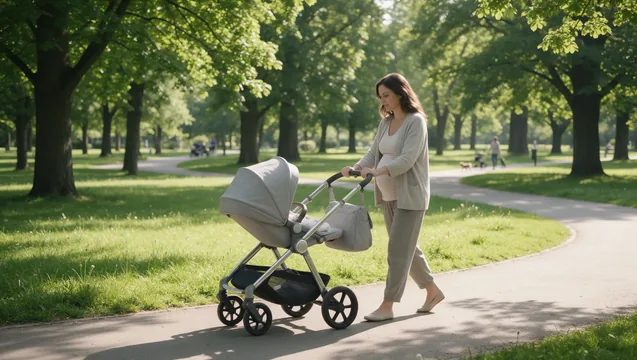
Can walking induce labor at the end of pregnancy?
A clear, practical answer to “Can walking induce labor at the end of pregnancy?” for moms who want gentle walking and real community — without pressure or hype.
The MaMile blog
Practical, kind guides to walking and running through trying to conceive, pregnancy, and postpartum — written for moms who want to show up consistently, not chase a pace.
New here? What MaMile is — the full reference · Start your free 14-day trial · RSS
A clear, practical answer to “Can walking induce labor at the end of pregnancy?” for moms who want gentle walking and real community — without pressure or hype.
A clear, practical answer to “How do I walk when I have first-trimester nausea?” for moms who want gentle walking and real community — without pressure or hype.
A clear, practical answer to “Is it okay to walk on ovulation day when trying to get pregnant?” for moms who want gentle walking and real community — without pressure or hype.
A clear, practical answer to “Should I change my workout intensity in the luteal phase when TTC?” for moms who want gentle walking and real community — without pressure or hype.
A clear, practical answer to “When can I start walking again after a miscarriage?” for moms who want gentle walking and real community — without pressure or hype.
A clear, practical answer to “Can I walk after an IVF embryo transfer?” for moms who want gentle walking and real community — without pressure or hype.
A clear, practical answer to “Can walking help with bloating while trying to conceive?” for moms who want gentle walking and real community — without pressure or hype.
A clear, practical answer to “Is walking good for PCOS when trying to conceive?” for moms who want gentle walking and real community — without pressure or hype.
A clear, practical answer to “Are stairs or outdoor walks better exercise in pregnancy?” for moms who want gentle walking and real community — without pressure or hype.
A clear, practical answer to “When is it safe to use a jogging stroller postpartum?” for moms who want gentle walking and real community — without pressure or hype.
A clear, practical answer to “How do I get my partner to walk with me postpartum?” for moms who want gentle walking and real community — without pressure or hype.
A clear, practical answer to “Can walking reduce stress while trying to conceive?” for moms who want gentle walking and real community — without pressure or hype.
A clear, practical answer to “Why do I suddenly have more energy to walk in the second trimester?” for moms who want gentle walking and real community — without pressure or hype.
A clear, practical answer to “How do mom walking groups handle nap schedules?” for moms who want gentle walking and real community — without pressure or hype.
A clear, practical answer to “How can walking accountability work without guilt or leaderboards?” for moms who want gentle walking and real community — without pressure or hype.
A clear, practical answer to “I'm an introvert — how do I join a walking group without awkward small talk?” for moms who want gentle walking and real community — without pressure or hype.
A clear, practical answer to “What's the difference between a mom walking pod and a regular fitness app?” for moms who want gentle walking and real community — without pressure or hype.
A clear, practical answer to “How do I find mom walking buddies near me?” for moms who want gentle walking and real community — without pressure or hype.
A clear, practical answer to “Do I really have to wait 6 weeks to walk after birth?” for moms who want gentle walking and real community — without pressure or hype.
A clear, practical answer to “What does pelvic heaviness during a walk mean after birth?” for moms who want gentle walking and real community — without pressure or hype.
A clear, practical answer to “Do I need special shoes for postpartum walking?” for moms who want gentle walking and real community — without pressure or hype.
A clear, practical answer to “Can dog walking count as postpartum exercise?” for moms who want gentle walking and real community — without pressure or hype.
A clear, practical answer to “Are night walks with a baby a good idea postpartum?” for moms who want gentle walking and real community — without pressure or hype.
A clear, practical answer to “Should I engage my core while walking after birth?” for moms who want gentle walking and real community — without pressure or hype.
A clear, practical answer to “How do I walk with a toddler and a baby at the same time?” for moms who want gentle walking and real community — without pressure or hype.
A clear, practical answer to “How do I keep a postpartum walking habit in winter?” for moms who want gentle walking and real community — without pressure or hype.
A clear, practical answer to “Why do my hips hurt when I walk postpartum, and what helps?” for moms who want gentle walking and real community — without pressure or hype.
A clear, practical answer to “Is it okay to walk while breastfeeding?” for moms who want gentle walking and real community — without pressure or hype.
A clear, practical answer to “When can I start walking with a stroller after giving birth?” for moms who want gentle walking and real community — without pressure or hype.
A clear, practical answer to “Can I walk with round ligament pain?” for moms who want gentle walking and real community — without pressure or hype.
A clear, practical answer to “How can I keep walking with plantar fasciitis in pregnancy?” for moms who want gentle walking and real community — without pressure or hype.
A clear, practical answer to “How long should my pregnancy walks be each day?” for moms who want gentle walking and real community — without pressure or hype.
A clear, practical answer to “Is it safe to walk outside in hot weather while pregnant?” for moms who want gentle walking and real community — without pressure or hype.
A clear, practical answer to “Should I stop walking if I get Braxton Hicks contractions?” for moms who want gentle walking and real community — without pressure or hype.
A clear, practical answer to “How should I walk if I have gestational diabetes?” for moms who want gentle walking and real community — without pressure or hype.
A clear, practical answer to “Is walking good for swollen ankles in pregnancy?” for moms who want gentle walking and real community — without pressure or hype.
A clear, practical answer to “Can walking induce labor at the end of pregnancy?” for moms who want gentle walking and real community — without pressure or hype.
A clear, practical answer to “How do I walk when I have first-trimester nausea?” for moms who want gentle walking and real community — without pressure or hype.
A clear, practical answer to “Is it okay to walk on ovulation day when trying to get pregnant?” for moms who want gentle walking and real community — without pressure or hype.
A clear, practical answer to “Should I change my workout intensity in the luteal phase when TTC?” for moms who want gentle walking and real community — without pressure or hype.
How gentle movement supports maternal mental health from pregnancy through postpartum, plus a baby-blues vs PPD guide and crisis resources.
Why small, identity-based habits beat chasing pace and step counts for moms, and the habit science behind MaMile's no-streaks, no-leaderboards approach.
An evidence-based framework for doulas, midwives, and IBCLCs to guide clients back to movement after birth — staging, warning signs, and gentle language.
A morning self-check-in is a 30-second daily ritual of naming your mood, energy, and sleep. Here's why it protects mental health and catches trends early.
A practitioner's checklist for evaluating a postpartum movement app: real evidence base, habit-first design, red-flag safety, shame-free tone, no wearable needed.
A practical guide for doulas, midwives, and birth pros: how to recommend MaMile, co-brand it, and earn 20% recurring commission through the Partner Program.
The 2-week rule, simply: baby blues lift within two weeks; postpartum depression and anxiety persist, intensify, and impair. Symptoms, EPDS, and crisis lines.
There's no single timeline for healing after birth. Why comparison and bounce-back culture harm maternal mental health, and how to reframe recovery around identity.
On the hardest, lowest days, two minutes of gentle movement still counts. A kind, evidence-based re-entry plan, plus when to rest or reach out instead.
Frequent gentle movement beats occasional hard workouts postpartum: health benefits track total weekly volume, and consistency is what your body and mood can repeat.
For sleep-disrupted, recovering mothers, tracking effort (RPE) and mood beats steps, calories, or heart rate. Here's the evidence, and why it protects your wellbeing.
Lapsed on walking? You didn't ruin it. Use "never miss twice," shrink the habit, and let self-compassion (not guilt) get you moving again.
On no sleep, motivation crashes. The fix isn't discipline, it's shrinking the goal, anchoring it to naps and feeds, and treating movement as kindness.
Evidence-based talking points for the 6-week clearance conversation: a floor not a finish line, what cleared does and does not mean, criteria-based progression, and red flags to refer.
Evidence shows walking and physical activity can ease postpartum depression and anxiety — about 150 min/week over 12+ weeks, as a complement to care.
Your complete guide to safe movement in pregnancy: ACOG's 150 min/week, walking as the foundation, the talk test, trimester tweaks, and warning signs.
ACOG recommends 150 minutes of moderate activity weekly in pregnancy. Here's how to split it, what counts, and how to pace by effort, not by a number.
The talk test is the simplest safe-intensity gauge in pregnancy: walk where you can talk but not sing. Why perceived effort beats heart rate, with an RPE chart.
Yes, you can start exercising during pregnancy even if you were sedentary. A gentle week-by-week walking plan, what to avoid, and when to get clearance.
Pelvic girdle pain doesn't have to stop you walking. Use shorter strides, level ground, pacing, and support, plus when to see a physiotherapist.
The ACOG warning signs that mean stop exercising during pregnancy and call your provider now — bleeding, fluid leaking, contractions, chest pain, calf pain and more.
Exercise supports fertility when it's moderate. How much is the sweet spot, when vigorous training is too much, and why walking is the safest TTC choice.
Vigorous, high-volume training can disrupt ovulation — but moderate exercise helps. The real factor is energy balance. Here's how to find the right amount.
Yes, keep moving gently during the two-week wait. Walking is ideal — what to do, what to avoid, and how to handle the emotional side, with real evidence.
A calm, evidence-based map of moving after birth: walking first, effort over pace, a realistic timeline, red flags, pelvic floor, running, and mood.
Gentle walking after a C-section starts within a day to prevent clots. A safe, week-by-week ramp by effort, not pace — with the warning signs to watch for.
The 6-week clearance isn't a finish line. Here's what actually recovers over 3 to 18 months — tissue, pelvic floor, core, sleep, identity — month by month.
RPE (rate of perceived exertion) is a 0–10 scale of how hard your body feels working. Here's why effort beats pace, steps, and heart rate after birth.
Bleeding, pain, pelvic heaviness, new leaking, dizziness, one-sided calf pain, or a mood crisis — which postpartum walking symptoms mean slow down vs. call now.
A criteria-based return-to-running checklist for after birth: the 12-week floor, the load and impact tests, the pelvic floor self-check, and when to see a PT.
Leaking when you walk or run after birth is common but treatable. What it signals, what helps, and when to see a pelvic floor physical therapist.
Diastasis recti after pregnancy: what abdominal separation is, how to do the finger-gap self-check, which gentle deep-core exercises help, which to avoid, and when to see a PT.
No — ACOG recommends judging postpartum exercise by perceived effort, not heart rate, because heart rate is unreliable after birth. Here's the evidence-based case.
Gentle walking is one of the first movements most new moms can return to — but the right time depends on your delivery and how you feel. Here is a kind, week-by-week timeline.
Walking is one of the safest, simplest ways to stay active through pregnancy. Here is what changes each trimester — and how to keep it gentle and comfortable the whole way.
When you are trying to conceive, gentle, consistent movement can support your body and your mind — without the pressure of intense training. Here is a kind approach.
Newborn days are unpredictable, and that is exactly why rigid routines fail. Here is how to build a flexible walking habit that fits around naps, feeds, and real life.
If you ran before baby and miss it, you can get back there — gently. Here is how to bridge from postpartum walking to running without rushing your recovery.
Willpower fades; connection lasts. Here is the simple psychology behind why walking alongside other moms turns a fragile intention into a habit that actually sticks.